
Science Symposium IV: “The Evolution of Human Knowledge—100 Years Later”
Science Symposium IV: “The Evolution of Human Knowledge—100 Years Later”
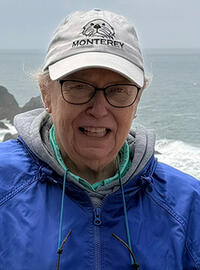
By Marjorie Ray, Washington, United States
The Urantia Book is rich with scientific insights and foreshadowing. The recent symposium, which I had the privilege to moderate, focused on the evolution of human knowledge since the papers were first indited. Our goal was to examine some of the areas where human understanding aligns with what was revealed a century ago.
Though warned that they could not impart unearned knowledge, the revelators did not shy away from whetting the human appetite to know and understand more of our Father’s creation. As a scientist, I often tell people that this is like scientific inquiry—we begin by wanting to understand something, then we research and endeavor to explain it. Once you start questioning, you too can become a scientist!
Scientific inquiry, especially in the fields of cosmology and astronomy, has expanded from when many of us were in school. Thanks to the proliferation of detailed images from deep space, the average person has become more familiar with and knowledgeable about space. And since each new discovery tends to be explained in relation to past theories and hypotheses, discussions that used to take place in universities and laboratories now appear in the general press. As a community of believers in the revelation, we are particularly attuned to the latest developments.
Over the past decade Urantia Foundation has sponsored four scientific symposiums. Research papers are hard work! It takes a year to prepare for a symposium, and each paper is circulated among the presenters and invited panelists to ensure that the audience benefits from a well-rounded discussion.
I would like to thank Ralph Zehr who launched the series back in 2015, as well as Brad Garner, David Neufer, Gabriel Rymberg, Gard Jameson, Geoff Taylor, George Park, Phil Calabrese, Nigel Nunn, and Tom Allen for their outstanding research and presentations. Andre Radatus, Bob Debold, Chuck Thurston, Dick Prince, Halbert Katzen, Josh Abernathy, Luigi Bertolomeo, Mark Blackburn, and Tim Froncek also deserve appreciation for previewing the papers and helping presenters with the panels. We also thank Gary Tonge for his inspiring graphics, Joanne Strobel for her project-management skills, and Brad Garner for his reassuring direction and editing skills.
I encourage you to spend some time reading the papers and watching the videos here:
https://www.urantia.org/education/seminars-presentations. And don’t forget to check out the extensive archives from past symposiums. I hope to see more women join me next time. Remember, anyone can become a scientist!